The sector reflects in Madrid on the challenges and opportunities of children’s audiovisual content in Spain
The Spanish audiovisual industry gathered last Friday at the Puerta de Toledo Campus of Universidad Carlos III de Madrid (UC3M) to address one of the most urgent and, at the same time, most overlooked areas of the sector: the creation of children’s and family content.
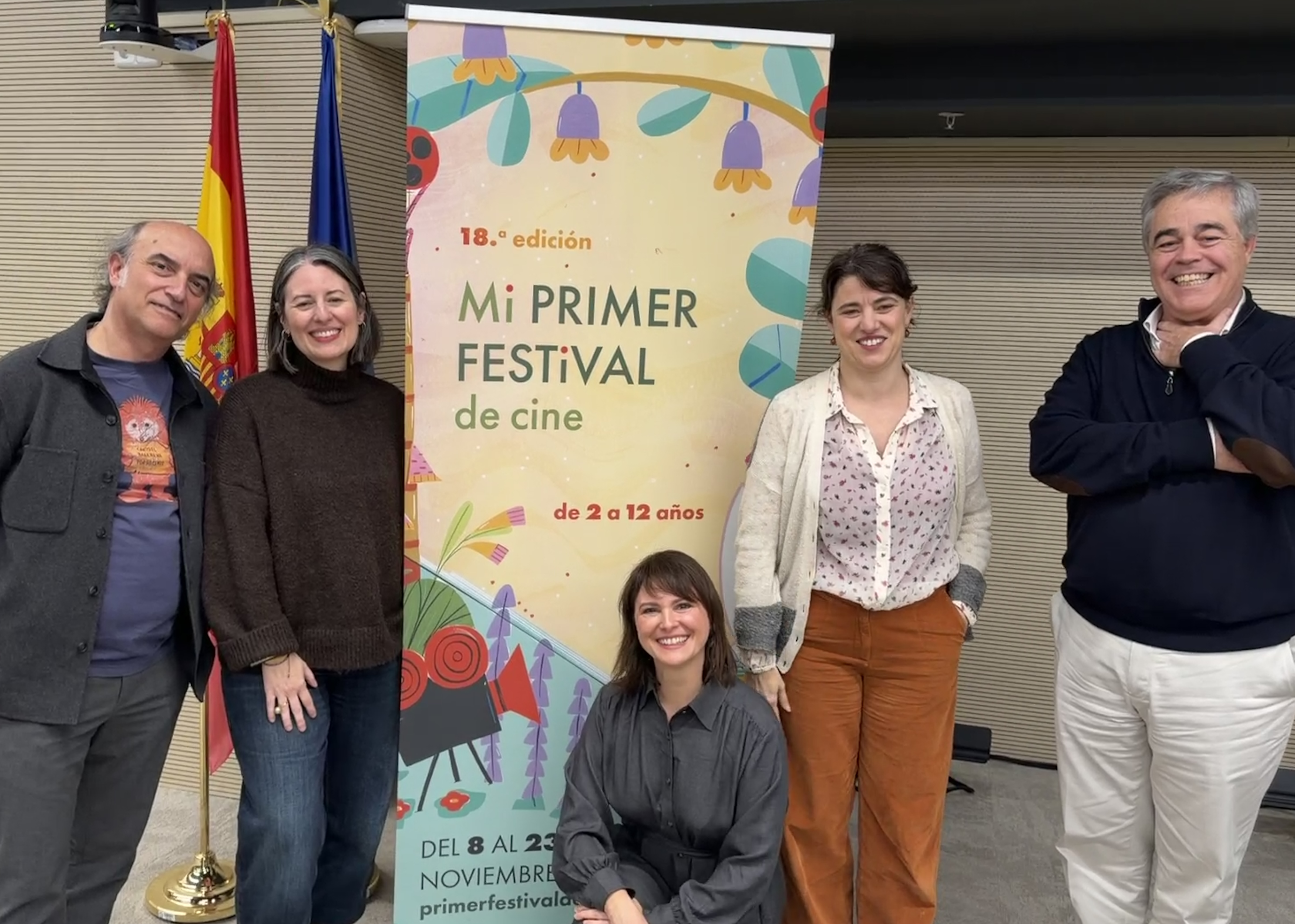
The professional event Challenges and Opportunities of Children’s Audiovisual Content in Spain, organised by Mi Primer Festival de Cine in collaboration with the UC3M Master’s Degree in Screenwriting for Film and Television, brought together professionals, screenwriters, producers, exhibitors and students to reflect on an audience that, despite being crucial for the future, remains underrepresented in national production.
Throughout the day, participants discussed the main challenges facing the industry, emerging opportunities and the urgent need to rethink how Spain relates to its youngest audiences.
A round table that opens an essential debat
The first part of the event focused on the panel Children and Family Audiences: A Window of Opportunity, moderated by Tamara Moya (UC3M) and featuring:
Álvaro Postigo (President of FECE – Exhibitors)
Yago Fandiño (Head of Children’s Content at RTVE – Clan)
Nuria G. Blanco (Screenwriter and Director)
Verónica Buide (Production and IP Strategy Consultant – Children’s Content)
Estíbaliz Burgaleta (Screenwriter, selected for VIVABOOK Lab)
A shared diagnosis: a necessary yet fragile sector
Speakers agreed that children’s audiovisual production in Spain is facing a paradox: its importance is undeniable, yet its industrial structure remains weak.
Among the main issues raised:
Financing remains a major obstacle Childhood is not a priority in public policy or budgeting in Spain, explained Postigo. Companies perceive the sector as delicate and fragmented, making long-term investment difficult.
A market that excludes children Children’s consumption habits have changed dramatically, but the sector has not kept pace. The industry continues to approach content from an adult perspective, even though children’s lives and interests have shifted considerably, noted Burgaleta. Participants called for deeper knowledge of the 7–12 age group, considered the most challenging and one of the least understood.
Lack of diversity and narrative risk Verónica Buide pointed out that the Spanish market tends to repeat formulas and avoid risk-taking, leading to limited thematic diversity and an over-reliance on adaptations. Blanco added: “Children’s writing is not valued enough. It is an exacting genre: few scenes, high precision and absolutely no condescension.”
A cultural responsibility Speakers also emphasised that content for children is not merely entertainment; it forms part of children’s cultural rights and is essential in developing critical thinking, identity and empathy. What kind of society do we want to show our children?, asked Yago Fandiño.
Opportunities: a fertile landscape if the sector chooses to invest Despite the challenges, the panel highlighted promising opportunities:
A vast and universal audience Well-crafted children’s content often travels better internationally than many other genres. Recent European examples such as Robot Dreams or Olivia and the Invisible Earthquake show that it is possible to combine tradition, identity and international reach.
Alliances between exhibitors, broadcasters and creators As FECE noted, exhibition venues rarely have enough local children’s content. However, when high-quality films are programmed:
Families attend
New audiences become loyal
Long-lasting cultural habits are formed
New support policies Participants stressed the need to include children’s audiovisual production in national cultural policy, following the example of several European countries where it is considered strategic.
Creativity and emerging talent New creators rooted in authenticity and local experience can generate stories with powerful universal appeal. Programmes such as VIVABOOK Lab show that there is talent, but more structure is needed.
Writing for children: a masterclass for creators The event continued with the masterclass Writing for Children: Key Elements of a Strong Project Bible, led by Nuria G. Blanco.
Key points included:
Writing for children requires emotional and narrative clarity
A project bible must balance depth, tone, world-building and a genuine child’s perspective
Stories should address issues that genuinely concern children: fears, autonomy, friendship, justice, grief, identity and humour
“We must remember how we looked at the world when we were eight,” Blanco reminded the audience.
A meeting that plants seeds for the future The event concluded with a shared message: Spain must decisively support children’s audiovisual production, not only as a cultural industry but also as an educational, social and emotional tool.
Mi Primer Festival and UC3M reaffirmed their commitment to creating spaces for debate, training and collaboration that help build a sustainable ecosystem for the most important and demanding audience: children.
.jpg)